Surfer Girl’s latest LP, Midnight, completes a four-album thematic arc encompassing the stages of a day that began in 2022 with Sunrise, continued through Noon and Sunset, and now arrives in a world illuminated by neon rather than daylight.
According to frontman Carter Reeves, the progression was intentional from the beginning. While Reeves stops short of claiming each record perfectly embodies its namesake, he intimated that the titles served as creative parameters, helping guide the mood and sonic palette.
“Four albums felt like a great series,” he explained. “Sunrise was the awakening of the project. Noon was getting your footing and stepping out. Sunset was the wind-down and culmination of everything I’d learned that day. Midnight is the more sleek, pregame, going-out-and-having-a-night-on-the-town album.”
Sleek is an unusual adjective to describe music but, when queried about his use of the term, Reeves explained, “Sleek feels like something that is smooth, metallic, and reflects light. Like a black Lamborghini driving through Gotham, or a leather jacket on a Hollywood night. It’s got a quiet confidence, a very clean sound, and it’s clearly darker in imagery and mood than the more happy-go-lucky sunshine albums…Sleek just feels right.”
The description captures Midnight’s contrast with their sunnier past work. Where earlier releases often radiated beachside optimism, this latest release inhabits a cooler, grittier environment with a more polished, nocturnal energy.
For much of Surfer Girl’s catalog, songs began and ended in Reeves’ home studio. However, Midnight represents a significant departure from that approach. Like previous records, the material started as demos created at home, but instead of being largely completed there, the songs were brought into producer Jon Joseph’s professional studio environment to help guide them to fruition.
“I’d say it was all very symbiotic,” Reeves said about the creative process, adding that he would “chip away” at each demo and consult Surfer Girl guitarist Jack Pavlina when he felt stuck. “Jack’s got a crazy smooth way of writing and producing. Quick decisions, straight from the heart,” Reeves said, noting that it’s very similar to how Jon Joseph works as well.
Reeves knew they needed all the demos to be as far along as possible before taking them into the studio, but they also wanted to “leave enough room in the songs to have them really grow and evolve through JJ’s process.”
“Jon is an absolute beast,” said Reeves. “He’s able to see an idea, hear a sketch, and decisively and clearly bring the song to life.”
Reeves recalls how quickly the album’s framework came together. “Within a week the whole album was drafted out, skeleton in place,” he says. “From that point on, Jon and I locked in and really made everything shine.”
The result, he said, was the freshest and most exciting album-making experience he has undertaken with Surfer Girl.
While Surfer Girl has always blurred stylistic boundaries, Midnight more heavily embraces a reggae sound than any previous release. When asked if this was a conscious creative choice, or perhaps the result of outside influences, or maybe something else, Reeves responded, “I’d say a little bit of everything you mentioned. My goal has always been to marry those core reggae elements in an unconventional way. Bubble over double-time beats, skanks in a rap song, etc. I think the ability to make this one feel more ‘reggae’ came from my trust in outside players to help me pull off a level of sonic professionalism that I can’t do alone.”
“Josh Kay played all the keys and bubble on the record, which immediately brought it to life,” Reeves expanded, adding that Sam Callahan’s bass gave it “the groove it needed.” Additionally, the dub-inspired vocal and drum effects further strengthened the reggae flavor without pushing the album entirely into genre territory.
One of the most striking aspects of Midnight is Reeves’ lyrical approach. Rather than telling straightforward stories, songs unfold through rapid-fire phrases and flashes of vivid imagery to capture fleeting moments or relay emotions and states of mind. About this frenetic style, Reeves explained that the looseness of the album’s themes encouraged a more improvisational vocal approach, and because many songs incorporate rap-influenced cadences, Reeves found himself gravitating toward concise, punchy lines rather than lengthy narrative passages.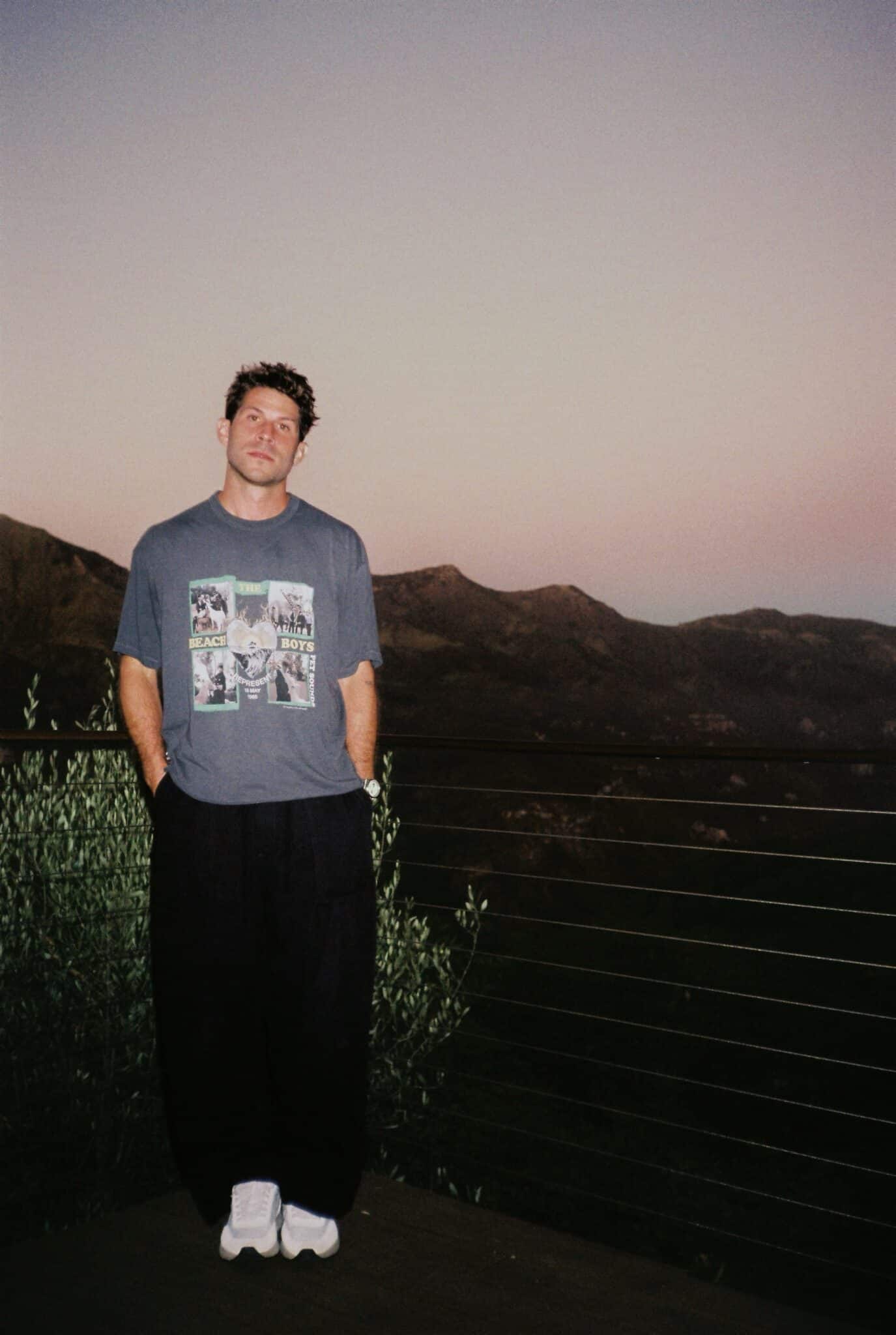
“It felt as though there was more room and freedom to sorta riff, vocally. A lot of the vocals have a more rapped approach, which naturally gives the option to speak in shorter, ‘swaggier’ one-liners versus a full journal entry a-la some folk song,” he said.
As for the genesis of his lyrics, Reeves said that he often freestyles initially to discover rhythms and flow, but the final lyrics are carefully crafted. “I’ll often sketch out the cadence, flow and arc of a verse by freestyling into the mic,” he explains. “Then I’ll pick apart the straight-from-the-heart gibberish and turn it into meaningful lyrics. That, to me, is the best combo. Half soul, half well-written.”
In an era when artists may feel obliged to tailor music to shrinking attention spans and streaming algorithms, twelve of the fifteen tracks on Midnight clock in under three minutes, with five of them under 2:30. Still, Reeves insists there was no strategic calculation behind those run times. “Definitely not intentional,” he confirmed, “Just sorta the length of a traditionally arranged mid-tempo song. You’re going to be landing anywhere around 2:10-3:00 minutes, unless you add a bridge, a long intro, or big post-chorus breaks.”
He continued, “I am a fan of getting to the point – although this album stretches its legs a bit more than others – but yeah, the shorter songs aren’t necessarily a reaction to our goldfish attention spans…more so just where the songs naturally felt like they landed.”
Resisting the temptation to cram every creative thought into a single track, Reeves prefers to focus on a song’s strongest ideas which often leads to tighter arrangements. “I try to limit myself to keeping a song clean, simple and understandable vs. packing everything in,” he said.
Midnight features two guest appearances which range from an emerging talent to one of rap’s most recognizable names.
On “Easy Tiger,” Reeves welcomed singer-songwriter Dylan Cotrone, an artist he’d admired long before the collaboration materialized. After bringing Cotrone out as an opening act during Surfer Girl’s spring tour, Reeves began envisioning a role for him on the album. While watching Cotrone perform one night in Pensacola, inspiration struck.
“I should get Dylan on ‘Easy Tiger,'” Reeves remembered thinking.
The collaboration came together quickly, with Cotrone joining him in San Pedro to finish the track in a single day.
“Dylan is the homie,” Reeves gushed. “Absolute rockstar, visionary, and doing it all with a smile on his face.”
Then there’s “Smoked Out,” featuring Wiz Khalifa. Even recounting the story, Reeves sounded slightly stunned. “Surreal. Insane. Wild. Bucket-list stuff,” he began. “Definitely still processing how momentous that is. He was the soundtrack to nearly a full decade of my life, and he’s always been someone who inspired me. Calm, cool, collected, and resolute.”
Reeves had created the beat years earlier and jokingly shared it with the label saying it would be perfect for Wiz. Months later, a text arrived informing him that the rapper loved the song and wanted to contribute.
“I’ll believe it when I see it,” Reeves remembered thinking.
A few weeks later, he opened his inbox to find his own vocals sitting beside a freshly recorded Wiz Khalifa verse. “It was insane.”
Several of Midnight‘s strongest moments emerge when Reeves deliberately interrupts expectations. Take “Lagoon,” which begins as a dreamy Beach Boys-inspired ballad before veering into rapped passages and eventually a hard, aggressive bridge.
Reeves explained his thinking: “Writing a love song, 3/4 ballad, in the tune of the Beach Boys, is very cool, but has been done before — done by the Beach Boys, done by Panda Bear, done by Summer Salt, done by countless bands.”
If the idea was going to be revisited, it needed an unexpected twist. “So how do we take this idea and flip it on its head?” he asked. “Rap a little bit, then throw in a big heavy bridge. That should do the trick. It’s definitely a collage. A hodge-podge of vibes, but I’m thrilled how it turned out.”
He took a similar approach with “Winter in New England,” perhaps the album’s most structurally ambitious piece. Originally envisioned as one continuous song, it was ultimately split into two sections. “Part 1” captures the gray melancholy of a New England winter with slow, dreamy, psychedelic surf rock before accelerating into kind of a Sublime-sounding vibe with mere seconds remaining in the song. Then, “Part 2” begins with a grunt and launches into an aggressive reggae rock groove representing the heat and excitement of Los Angeles.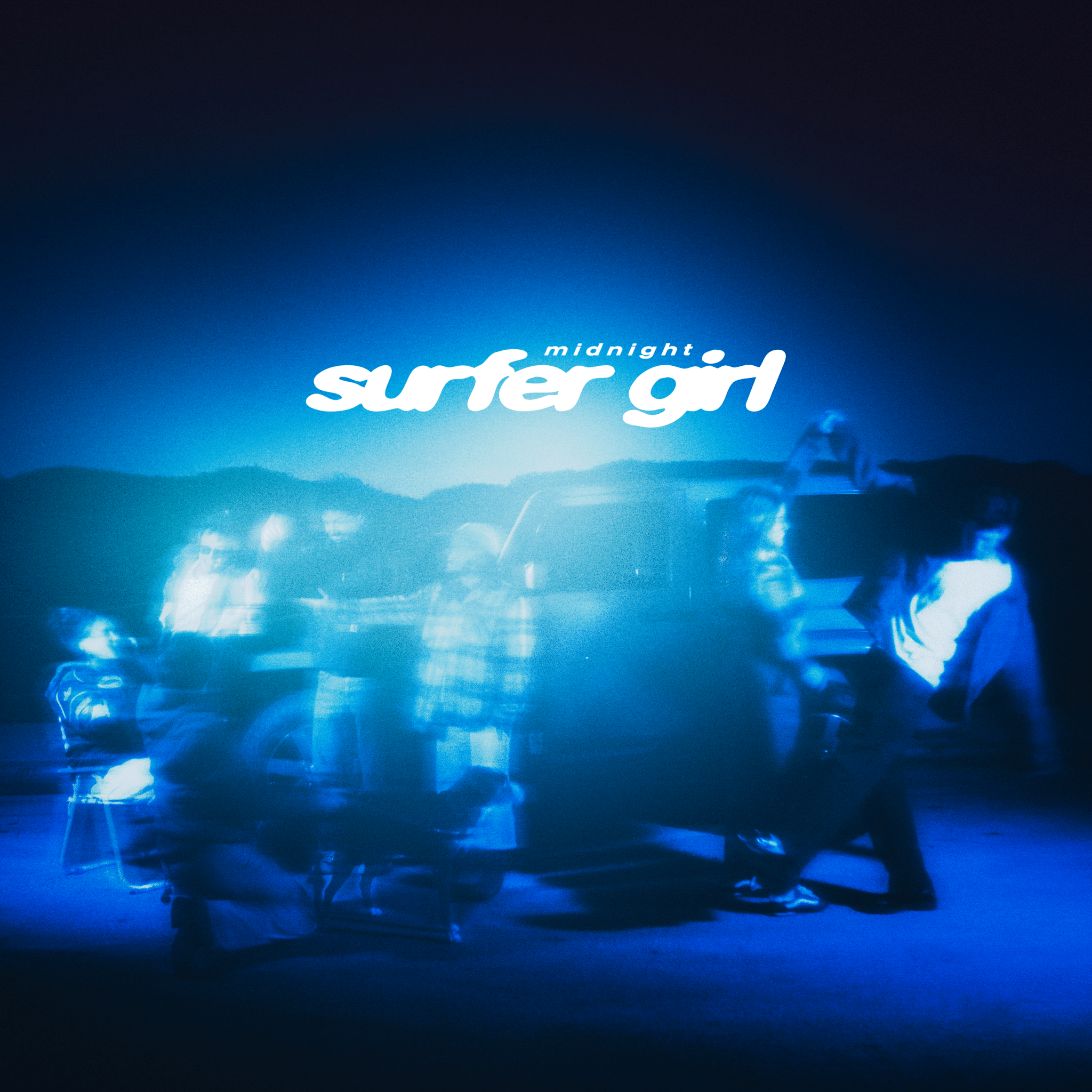
The division wasn’t an easy decision. Reeves worried that separating the composition might compromise his original vision, but he eventually accepted the practical realities of modern listening habits.
“Admittedly I was hoping to make this all one song, sorta my ‘Stairway to Heaven,’” Reeves revealed, referencing Led Zeppelin’s 8-minute epic hit that starts as a haunting ballad before evolving into an all-out rocker around the six-minute mark. “But in this ADHD, zero attention span era, it’s hard to keep people’s attention for 2.5 minutes and just keep saying ‘Wait for it, wait for it.’ So, at one point there was a suggestion to break the song into two. I wrestled with this for a while. Ultimately, I decided there were pros and cons on both sides and went with the split.”
Surfer Girl’s music has always drawn from a wide range of influences, but Midnight confidently expands beyond the band’s familiar reggae, rock, and rap foundation. While songs like “Chestnut Hill” and “Priorities” should please reggae purists, “Wrangler,” blends reggae with disco to create a highly danceable song about reveling in a new romance, and “Lose Touch” feels like a reggae-tinged track The Strokes might have recorded. These songs, along with “Wear It Out,” and the super catchy “Sober” boast undeniable pop appeal and sound fully capable of reaching the Billboard Hot 100 with sufficient exposure. Reeves’ songwriting demonstrates that Surfer Girl has the potential to transcend the American reggae-rock scene where they cut their teeth and elevate the band into a household name.
Midnight closes the Sunrise–Noon–Sunset–Midnight sequence, trading daylight for city lights and laid-back beach vibes for weightier subject matter. For an artist who just completed multi-album vision years in the making, Surfer Girl faces a new beginning for the first time in years. Reeves jokes about possible successors, such as “Fourth Meal” or “Afters,” but beneath the humor lies genuine uncertainty. “Honestly, no idea,” he said. “Completely blank slate and that is equal parts exciting and terrifying.”
If Midnight proves anything, it’s that Surfer Girl’s evolution is far from over.
Share this:


Over the years, he has interviewed many personalities throughout the reggae world including Ziggy Marley, Burning Spear, Lucky Dube, Bradley Nowell and many artists in the progressive roots scene.
Dave has also written and published a novel, “The Cosmic Burrito,” a tale of two friends who drive across the USA in search of the ultimate burrito. He plays ice hockey weekly for a recreational team he founded and manages, Team Rasta.
Reggae music has filled his life with a richness for which he will forever be grateful, and he gives thanks to musicians far and wide, past and present, whether they perform roots, dub, dancehall, skinhead, rocksteady or ska, whether their tools are analog or digital, as well as the producers, promoters, soundsystems, selectors and the reggae massive at large who comprise the international reggae community.
You can follow Dave on Instagram at @rootsdude and Twitter at @ElCosmicBurrito.