Reggae music has historically been a tool for galvanizing people to fight against oppression and bring about social justice. During a recent interview for an episode of the Talkin’ Reggae podcast, host Jay Canter and I discussed our thoughts on how many current artists seem to be missing an opportunity to use this powerful medium to speak out against the greed and tyranny of the current political administration.
Not all of them, however.
Last fall, Rootfire covered a single release called “Ice Breaker” by a band from Los Angeles called SELF CONTROL. This track pulled no punches in its staunch stance against the obliteration of civil rights and the heartless and violent policing by Immigration and Customs Enforcement.
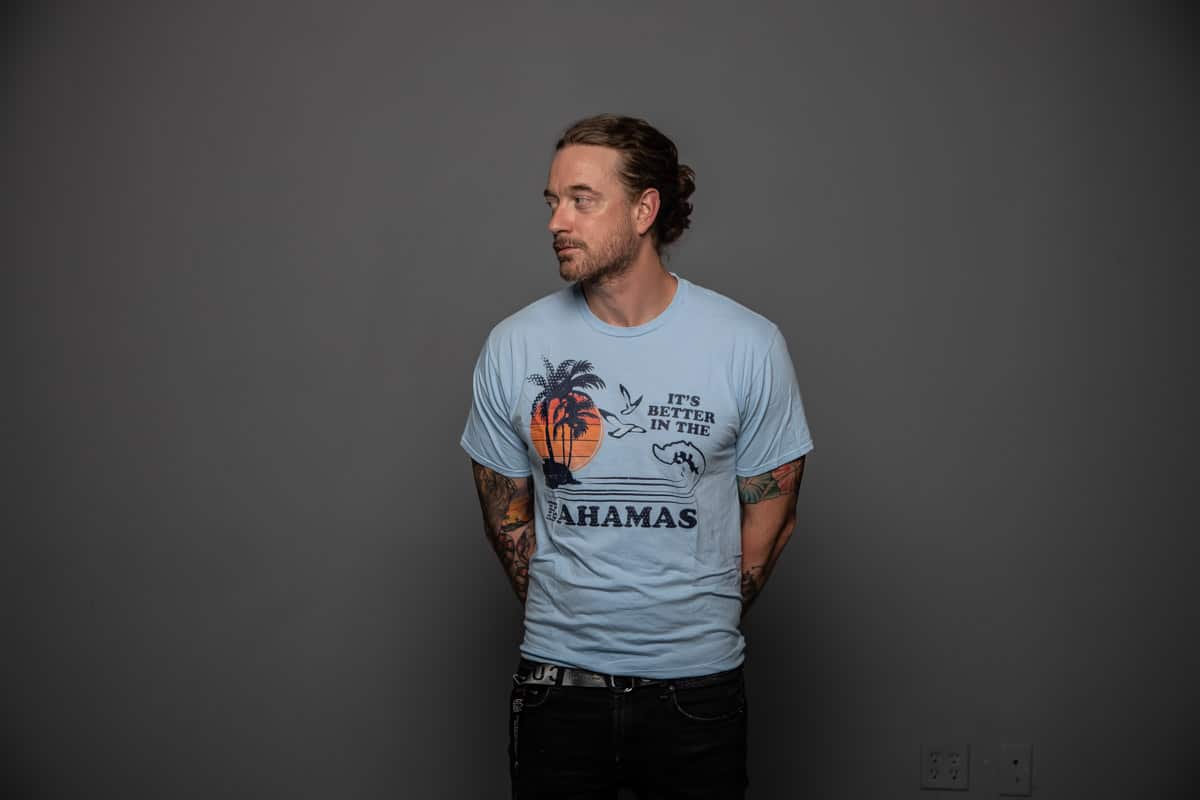
Kieran Sullivan aka K Rizza
More recently, New Jersey-based producer and musician, Kieran Sullivan, released an album of dub music under the name K Rizza similarly inspired by the overreach and inhumanity of the government. Titled DUB melts ICE, its press release states, “The record voices criticism of actions by U.S. immigration agencies (including ICE and DHS) and affirms support for due process, civil liberties, and the human rights of immigrants, U.S. citizens, and allies.”
Interestingly, Sullivan has created a work of protest through an instrumental work. The album’s title sends the most overt message of opposition, while song titles such as “RNG Minnesota,” “V.M.L.” and “Mamuka,” reference notable ICE controversies. “I didn’t want to make a record full of slogans. There are enough people shouting at each other,” Sullivan said. “The titles became a way of giving the instrumental music context without putting words in its mouth. If a title makes somebody curious enough to ask, ‘What does that mean?’ and they discover the human story behind it, then the title has already done something.”
Sullivan explained that he wasn’t sitting down saying, “I need to write a song about this particular event.” Rather, as he was writing and producing, he was absorbing news stories that were becoming “impossible to ignore,” and as the record developed, certain pieces started to feel connected to certain people, places or events.
Ultimately, Sullivan’s aim was to make his point on a visceral level. “Whatever happens between the title, the music and your own conscience, belongs to the listener,” he said.
In the spirit of innovative dub pioneer Lee “Scratch” Perry, Sullivan used a variety of sources and techniques to help create the atmosphere he sought. This included “field recordings” such as the sound of children playing, which can be heard in the song “N.C.S.E.D.B.M.W.” He explained, “I wanted little pieces of the real world inside the record. With something like children playing, the sound is completely ordinary and joyful. But put that sound inside a piece called ‘No Child Should Ever Die By Man’s Wars’ and suddenly you hear it differently. I didn’t need a lyric explaining why children deserve to be safe. Their voices say more than I could.”
In addition to the field recordings, the artist also utilized “original sampling” and “carefully selected royalty-licensed samples” to enhance his instrumental music. As for the “original sampling,” Sullivan shared that the record features “a ton of live tracking,” including bass, drums, guitars, keys and overdubs, much of which was contributed by bandmates from his reggae rock group, CC Roots. This included Evaldo Soares on drums, Nick Afflitto on guitars and trumpet and Emilio Guarino on bass.
“Then, I basically chopped everything into pieces,” he explained. “Sliced it, filtered it, stretched it, flipped melodies, converted sounds to MIDI—whatever worked. I’d dig through Splice, find something cool, change the key, slow it down and completely mess with it. I leveraged some Suno AI to generate some horn sounds and drum fills, then converted to MIDI to arrange organically, then bounce in place to audio, and chop, flip, dub, and dip.”
He expanded, “My favorite mixing plugins on this were Goodhertz Vulf Compressor, and assortments of UA and Logic stock stuff. Mastering favs are TR5 Suite and Izotope Ozone 9.”
Sullivan admitted, “Honestly, I don’t even know how some of these sounds came together. I just threw everything at the canvas and kept what felt good. Lots of late-night dub science with guitar pedals, Space Echo, Whammy, bass synth, Benidub sirens, EarthQuaker Device Data Corrupter—just getting weird with it. I think I’ll need to invest in a UA Satellite Quad or Octo core because I was pushing my DSP on the Apollo 8xp to the max. These Logic sessions are beautiful rabbit holes of madness.”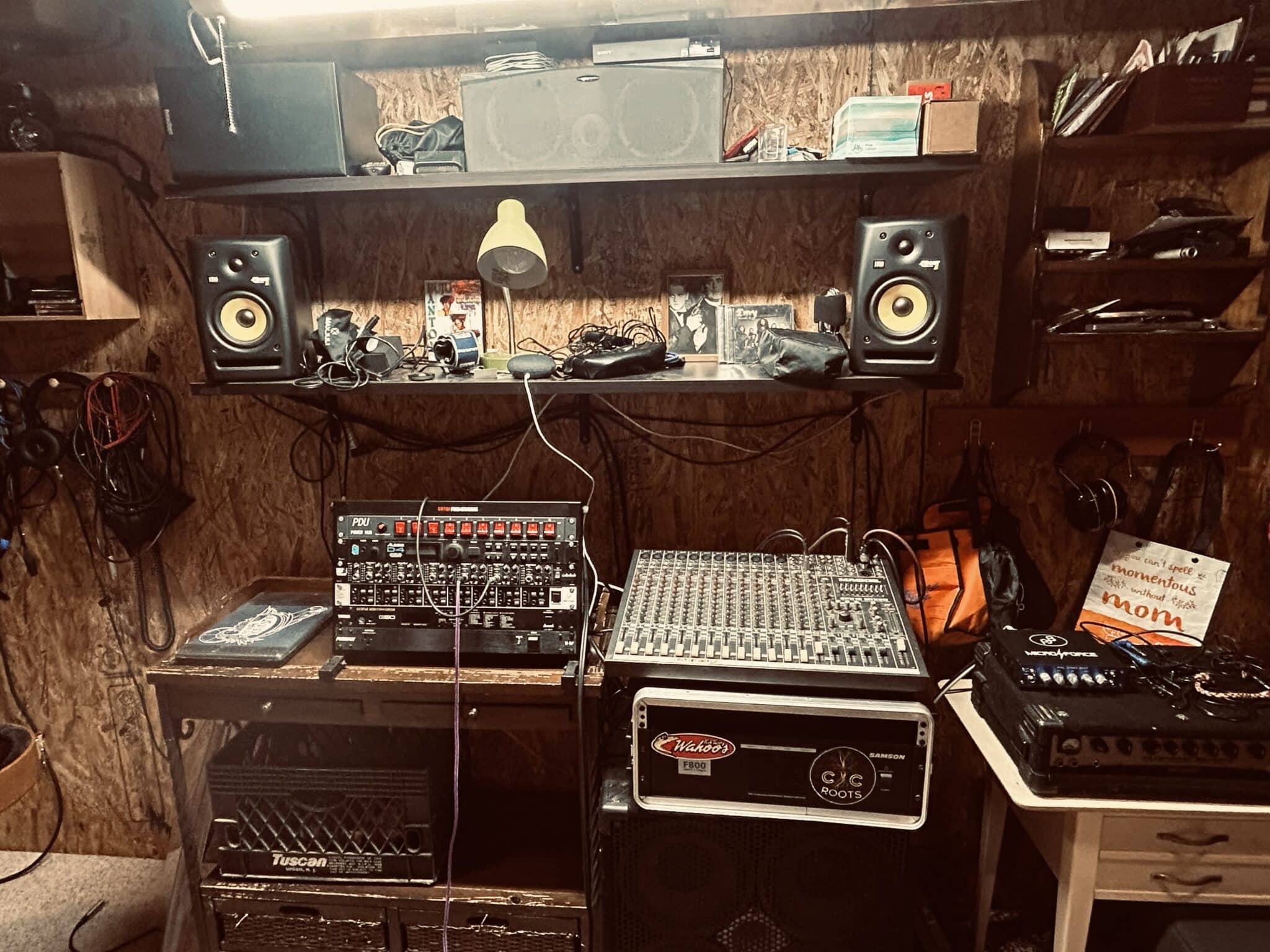
Sullivan said he could “nerd out” on gear all day, but he intends to save it for some studio breakdown videos. “My producer friends keep asking me, ‘How’d ya do that? What is that?’ Half the time, I’m like, ‘Good question!’”
When asked about examples of “carefully selected royalty-licensed samples” that he had implemented, Sullivan spoke about the song, “Guzman.” He shared, “That track already gives me chills because of the reference to Norlan Guzman-Fuentes and the tragic, senseless way he died. Then I found this vocal sample called ‘Palos De Liborio,’ produced by Jarina De Marco and her mother, Irka Mateo. It’s this raw vocal chant recorded with musicians deep in the heart of the Dominican Republic.
“Technically, it shouldn’t work. It’s kind of out of tune, out of time with the track—but I dropped it in, and somehow it worked like magic. Haunting, soulful, mystical. It gave me chills the first time I heard the two together.”
Sullivan added, “The vocalizations aren’t delivering some secret political message. They’re more texture and emotion. I wanted the track to leave some space for the listener to wrestle with it themselves. Those are the moments I’m looking for with samples, and this producer hat I wear as K Rizza. Not necessarily something that fits perfectly on paper, but something that hits you in the gut. When that happens, I stop messing with it.”
Delving a bit further into the song, “Guzman,” as mentioned earlier, it refers to Norlan Guzman-Fuentes, who was in ICE custody and was killed in the shooting at the Dallas ICE facility. “I chose his story partly because it isn’t neat or easy. He was undocumented, had a criminal history and was facing deportation. I’m not trying to erase any of that or turn him into a hero. That’s actually the point.
“For me, basic humanity can’t only apply to people whose stories are perfect. You can believe someone should face consequences, or even believe they shouldn’t legally be in this country, and still believe they’re a human being whose life has value.
“And just to be completely clear, I don’t condone or support violence against ICE agents—or anyone else. You can’t answer something you believe is wrong with more violence and expect to end up somewhere better. The tragic irony here is that the shooter was apparently targeting ICE, and the person who ended up dead was a detainee sitting restrained in their custody. The whole thing was just senseless.
“So ‘Guzman’ isn’t about picking his story over Alex Pretti, Samuel Guzmán or anybody else. There are unfortunately too many names that could’ve ended up on this record. His story represented something I kept coming back to while making it: once we start deciding which people deserve our empathy and which don’t, we’re heading somewhere spiritually pretty dark.”
“V.M.L.” is another song that uses its title to remind listeners about heavy-handed tactics used by ICE. In this case, the initials refer to a 2-year-old U.S. citizen whose April 2025 detention and removal to Honduras alongside her undocumented mother sparked a brief federal lawsuit. A judicial inquiry from a U.S. District Judge questioned whether a U.S. citizen child had been removed without proper process. However, the Department of Homeland Security officials stated that the mother had explicitly informed ICE that she wanted her 2-year-old daughter to remain with her and accompany her back to Honduras, leading the court to dismiss the case.
The tune opens up with the sounds of a siren, followed by some synth, a deep exhalation, and then what sounds like a dog bark before the drums and bass kick in. Given the use of field recordings on this album, it makes sense to construe that this is where the sounds of the siren and the dog bark originated, and it’s true for the siren, but the reality of the dog is even more interesting. “It’s not a dog bark,” Sullivan corrected me. “That’s a reversed synth playing a Gm chord, arpeggiated and sounds like a submarine depth charge. Somehow, the echo and filter make a peak in the wav and it sounds like a dog. It’s reversed in the beginning of the track but, later on, it’s played straight.” Sullivan added, laughing, that he has no idea how to recreate it, that he now refers to that sound as the “dub dog.”
The “dub dog” resurfaces later in the song, and with some eerie keyboard tones, synth emulating brass and electric guitar riffs over its fierce riddim, the track has a serious, haunting vibe. Near the end of the song, the word, “illegal” can be heard, a sample Sullivan curated from “Berserk Trap” by Cyborgs! via Black Octopus Sound.
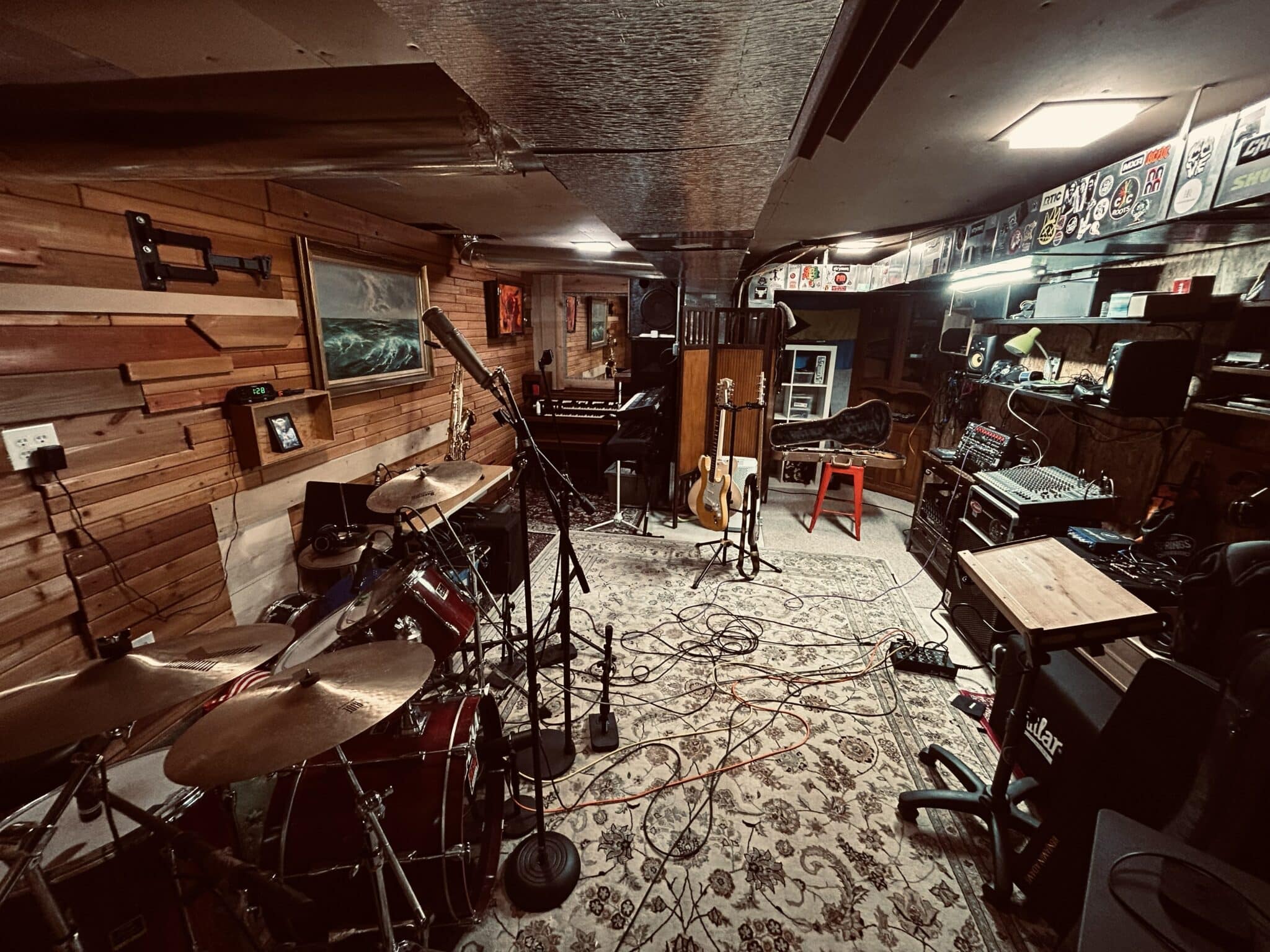
Fox Hill Studios
Another track, “Mamuka,” alludes to Mamuka Artmeladze, a 43-year-old immigrant from the country of Georgia who marked the 50th person to die in ICE custody during the current presidential administration. The song opens with some Middle-Eastern chanting followed by the sound of a sword being unsheathed. “Is that a sword? Is it a machete? I’m gonna lean on the poetic license of instrumental music here and neither confirm nor deny your interpretation,” Sullivan teased. “That’s one of the things I love about making instrumental music. Once the record leaves the studio, those images belong to the listener’s mind’s eye. If you heard a sword being unsheathed, then maybe it’s a sword.”
The chanting in “Mamuka” surfaces briefly at other times in the track, along with short clips of vocals played in reverse. These effects add psychedelic texture to a killer groove with some jazzy guitar, producing a song with vibes for days. “Dub has always fascinated me because space itself becomes an instrument,” Sullivan commented. “Something appears, echoes, disappears and leaves you thinking about what you just heard.”
Perhaps the trippiest tune on the album is “Camp East Montana,” a slower, chilled-out trip-hop/reggae fusion with synth effects that make listeners feel like they’re high on nitrous – total headphone candy. Mixed underneath all this sorcery at a low level are vocal samples from the “Latin Tech House Sample Pack” by Dropgun Samples created by Nick Hades and WNDRLND. ”Once again out of key, out of rhythm, but with some lo-fi flutter and wobble,” according to Sullivan.
Given the inspiration and theme of “DUB melts ICE,” many of the songs appropriately have an aggressive or confrontational feel to them, yet the album is not without levity. Its fourth track of eight, “Earthstrong,” feels like a laid-back oasis of upfulness. “You can’t make a record about fear, injustice and suffering and pretend that joy, gratitude and love disappear from the world,” said Sullivan.
“Earthstrong, as you know, is a Jamaican expression for birthday, and I released the album on mine. But the song isn’t really meant as a birthday song about me. It represents life. In the middle of everything else the record is confronting, there’s still this reminder: we’re alive. Children are laughing. People love each other. Music exists. There is beauty here worth protecting. I think empathy has to come from loving humanity, not just being angry about injustice.”
In similar fashion, Sullivan ends the album with a positive vibe. The last song, “Run Far,” injects a feeling of optimism. “Musically, I wanted the record to move toward some light. I didn’t want the listener to spend 26 minutes in darkness and then leave them there. There has to be movement, hope and some possibility of getting somewhere better,” Sullivan shared.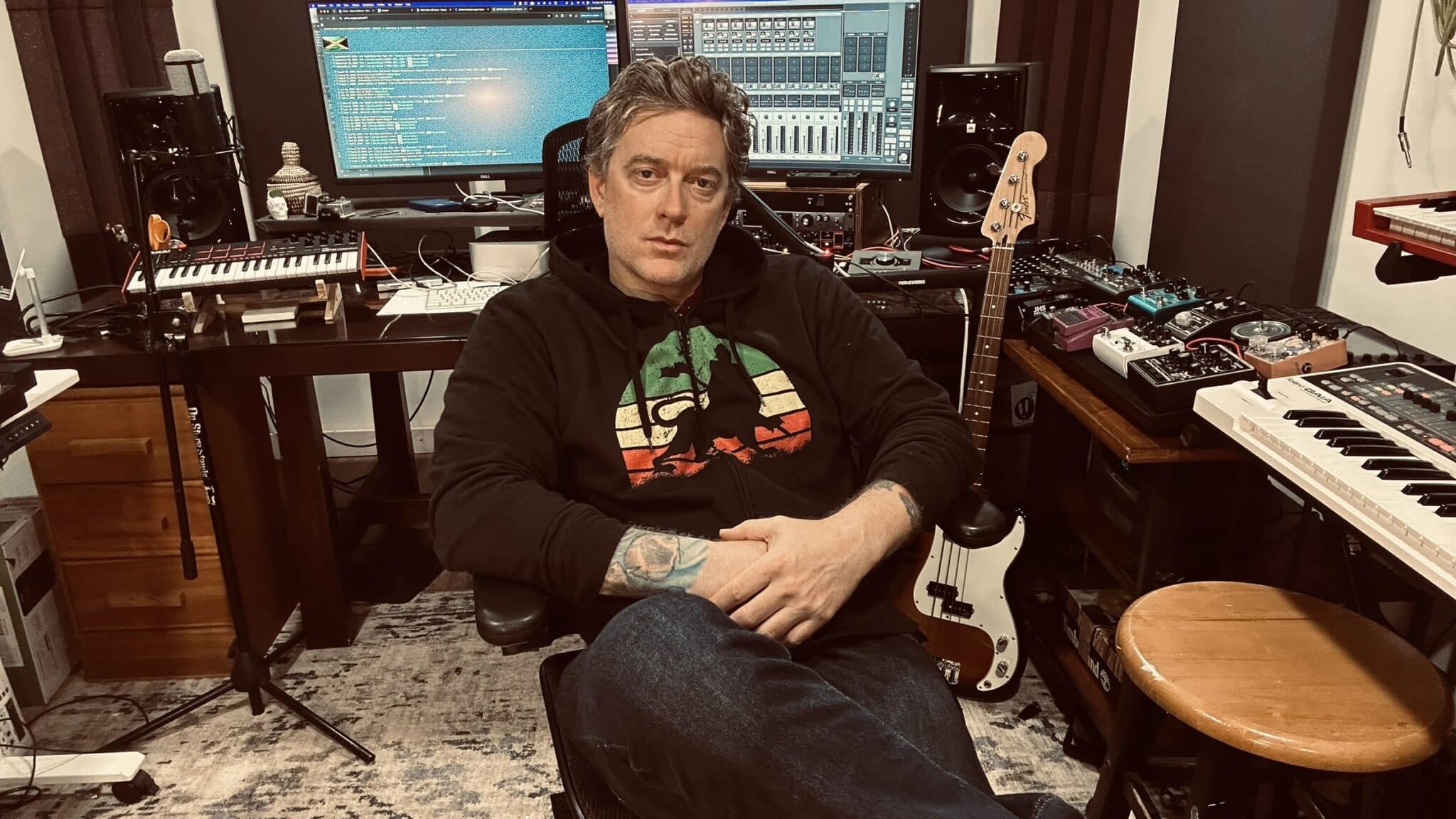
Regarding the intention behind the title, Sullivan explained that “Run Far” was not meant as a directive to immigrants or Americans who wish to escape. “To me it’s broader and more spiritual than that,” he said. “Run far from cruelty. Run far from dehumanizing people. Run far from becoming numb to somebody else’s suffering. Run far from the idea that fear gives us permission to abandon our humanity.”
In the end, Sullivan said that, to him, the record isn’t about Republican versus Democrat or left versus right. Rather, it’s asking much older questions: How do we treat another human being? What do we owe a child? What does dignity mean? What happens to our own humanity when we become comfortable with another person’s suffering?
“Those questions existed long before our current politics and they’ll exist long after them,” said Sullivan. “That’s the space I wanted the record to live in.”
Share this:


Over the years, he has interviewed many personalities throughout the reggae world including Ziggy Marley, Burning Spear, Lucky Dube, Bradley Nowell and many artists in the progressive roots scene.
Dave has also written and published a novel, “The Cosmic Burrito,” a tale of two friends who drive across the USA in search of the ultimate burrito. He plays ice hockey weekly for a recreational team he founded and manages, Team Rasta.
Reggae music has filled his life with a richness for which he will forever be grateful, and he gives thanks to musicians far and wide, past and present, whether they perform roots, dub, dancehall, skinhead, rocksteady or ska, whether their tools are analog or digital, as well as the producers, promoters, soundsystems, selectors and the reggae massive at large who comprise the international reggae community.
You can follow Dave on Instagram at @rootsdude and Twitter at @ElCosmicBurrito.